Harnessing AI Agents for Manufacturing Automation
Unlock manufacturing efficiency with AI agents: actionable insights for mid-market manufacturers.

Short answer: AI agents in manufacturing automate monitoring, analysis, and control of production processes, reducing human intervention and enhancing decision-making. They offer cost-effective solutions for mid-sized manufacturers, improving efficiency and profitability through predictive maintenance and smart quality control, with potential ROI of 300-500%.
How do AI agents enhance manufacturing automation?
AI agents are revolutionizing the manufacturing sector, enabling even mid-market companies to achieve operational efficiencies once thought exclusive to industry giants. This transformation is driven by the ability of AI agents to autonomously monitor, analyze, and control production processes, reducing reliance on human intervention and enhancing decision-making speed and accuracy.
What is the power of autonomous monitoring and control in manufacturing?
In traditional manufacturing setups, human oversight is necessary to ensure that processes run smoothly. However, AI agents in manufacturing defy this norm by autonomously monitoring production processes. According to research from Automation Anywhere, these agents require minimal human input, making operations more streamlined and less error-prone. Implementing AI-driven systems means that manufacturers can anticipate issues like equipment malfunctions before they occur, leading to substantial cost savings and reduced downtime.
What are the real-world benefits of AI in manufacturing?
The real-world application of these technologies can be seen at Siemens' Bad Neustadt site, where AI agents transformed operations by integrating disparate data sources into actionable insights. This integration allowed for enhanced workflow automation across the entire value chain, as reported by Siemens. Engineers at thyssenkrupp Automation Engineering also noted improvements in code quality and development speed, reflecting the tangible benefits of AI deployment.
How cost-efficient is implementing AI in manufacturing?
For mid-sized manufacturers, cost is always a critical concern. Fortunately, implementing AI agents doesn't necessitate enterprise-level budgets. Performix Business Services highlights Emerson's case in Louisiana, where AI deployment led to a 28% reduction in outages, a scalable solution even for smaller businesses at a cost of $5K per month. This aligns with broader industry trends, where AI projects typically see a 300-500% ROI, particularly in predictive maintenance applications.
How do AI agents streamline manufacturing operations?
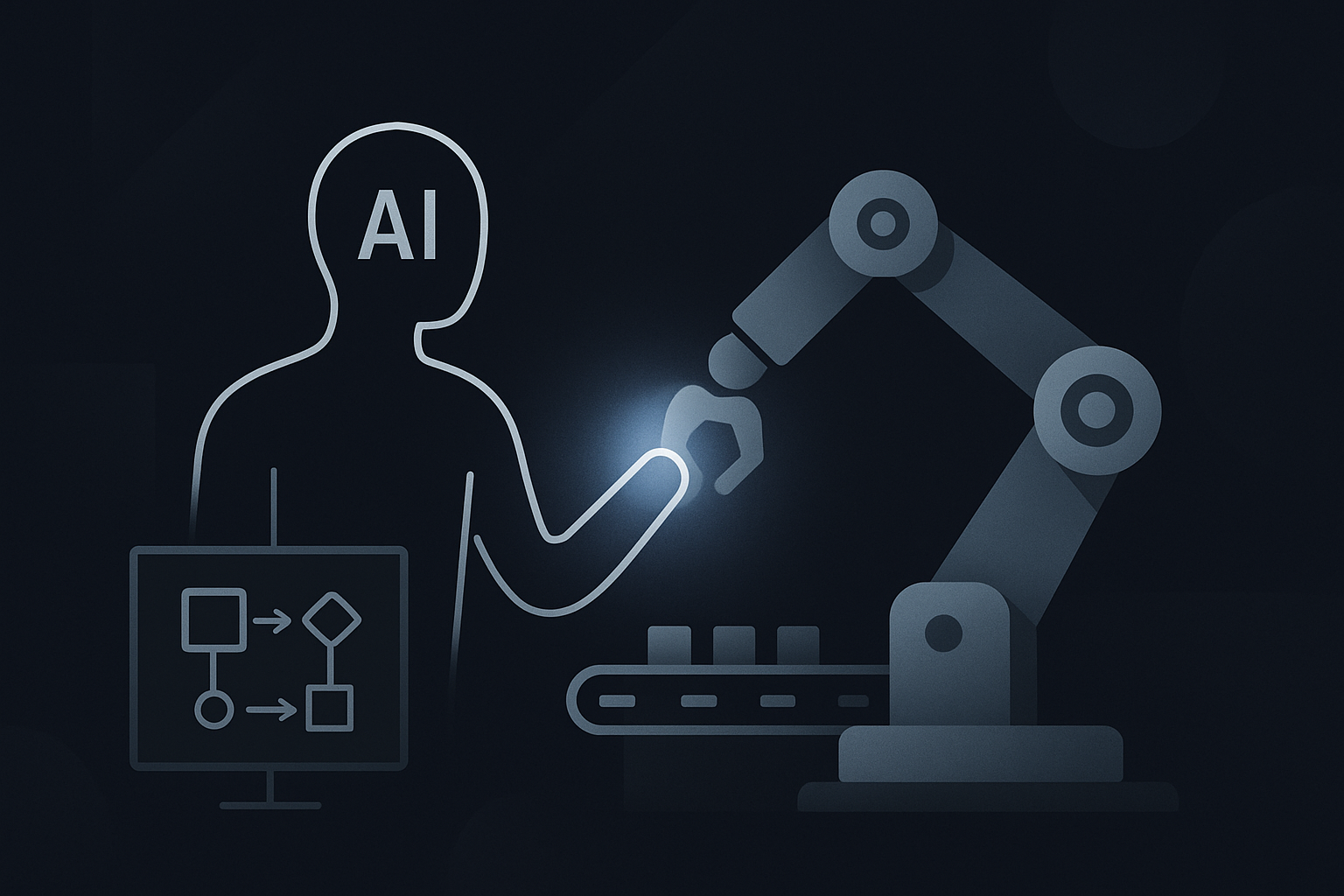
The deployment of AI agents in manufacturing is not merely about automation; it's about smart automation. Salesforce research indicates that AI agents can control assets remotely, adjusting production levels or ordering materials based on data-driven forecasts. This capability greatly reduces the need for day-to-day human intervention and allows companies to respond swiftly to dynamic market conditions.
How do companies integrate AI agents with existing systems?
Integration with existing systems is crucial for maximizing AI agent benefits. Companies like Emerson and other SMBs are adopting plug-and-play edge devices for anomaly detection, streamlining integration efforts. By coordinating multi-agent SCADA systems, larger operations can achieve a seamless flow of information and actions across various manufacturing stages.
How should manufacturers prepare for AI-driven future?
AI agents are set to drive significant improvements in manufacturing margins by 2026. However, readiness and capability gaps remain a challenge. To bridge these gaps, mid-market manufacturers should start by deploying AI in areas with clear financial returns, such as predictive maintenance and smart quality control.
Conclusion
The strategic deployment of AI agents provides a clear path for mid-market manufacturers to enhance efficiency, reduce costs, and increase profitability. Starting with targeted areas and scaling up as expertise grows can offer substantial benefits without the need for sizable initial investments.
Frequently asked questions
What are the main benefits of AI agents in manufacturing?
AI agents in manufacturing offer benefits such as reduced human intervention, enhanced decision-making, cost savings through predictive maintenance, and improved workflow automation. They enable companies to anticipate equipment malfunctions and streamline operations, leading to increased efficiency and profitability.
How do AI agents reduce manufacturing costs?
AI agents reduce manufacturing costs by autonomously monitoring and controlling production processes, minimizing human error, and predicting equipment malfunctions before they occur. This proactive approach results in substantial cost savings, reduced downtime, and a typical ROI of 300-500%, particularly in predictive maintenance applications.
What is the role of AI in predictive maintenance?
AI plays a crucial role in predictive maintenance by analyzing data to anticipate equipment failures before they happen. This allows manufacturers to perform maintenance only when necessary, reducing downtime and extending the lifespan of machinery. The result is significant cost savings and improved operational efficiency.
How can mid-sized manufacturers afford AI implementation?
Mid-sized manufacturers can afford AI implementation by starting with scalable solutions that do not require enterprise-level budgets. For example, Emerson's case in Louisiana shows that AI deployment can be achieved at a cost of $5K per month, making it accessible for smaller businesses while still delivering significant ROI.
What are the challenges in integrating AI agents into existing systems?
Integrating AI agents into existing systems involves challenges such as ensuring compatibility with current technology and coordinating multi-agent systems for seamless information flow. Companies can overcome these challenges by adopting plug-and-play edge devices and focusing on areas with clear financial returns, such as predictive maintenance.
Next step
Which process does your operation run on?
Pick the process slowing you down and apply. We assess whether your operation is a fit, and whether we're the right firm for it.
Review my workflow