AI & Automation in Retail: 2026 Insights
Explore how AI and automation will reshape retail processes by 2026 with insights, examples, and strategic advice.

Short answer: AI and automation in retail by 2026 will transform operations, making personalized recommendations and seamless checkouts mainstream. Success will depend on integrating technology with skilled personnel, overcoming connectivity issues, and balancing efficiency with brand identity. Retailers must strategically adopt AI to thrive in this evolving landscape.
Is Your Retail Business Ready for 2026?
Imagine walking into a store where every product recommendation feels personal, every checkout process is seamless, and every logistical challenge is resolved before it even arises. This isn't a futuristic dream, it's the reality being shaped by AI and automation in retail, forecasted to become mainstream by 2026. With 86% of logistics managers already adopting automation technologies, the trend is undeniable.
The Human Element in AI Transformation
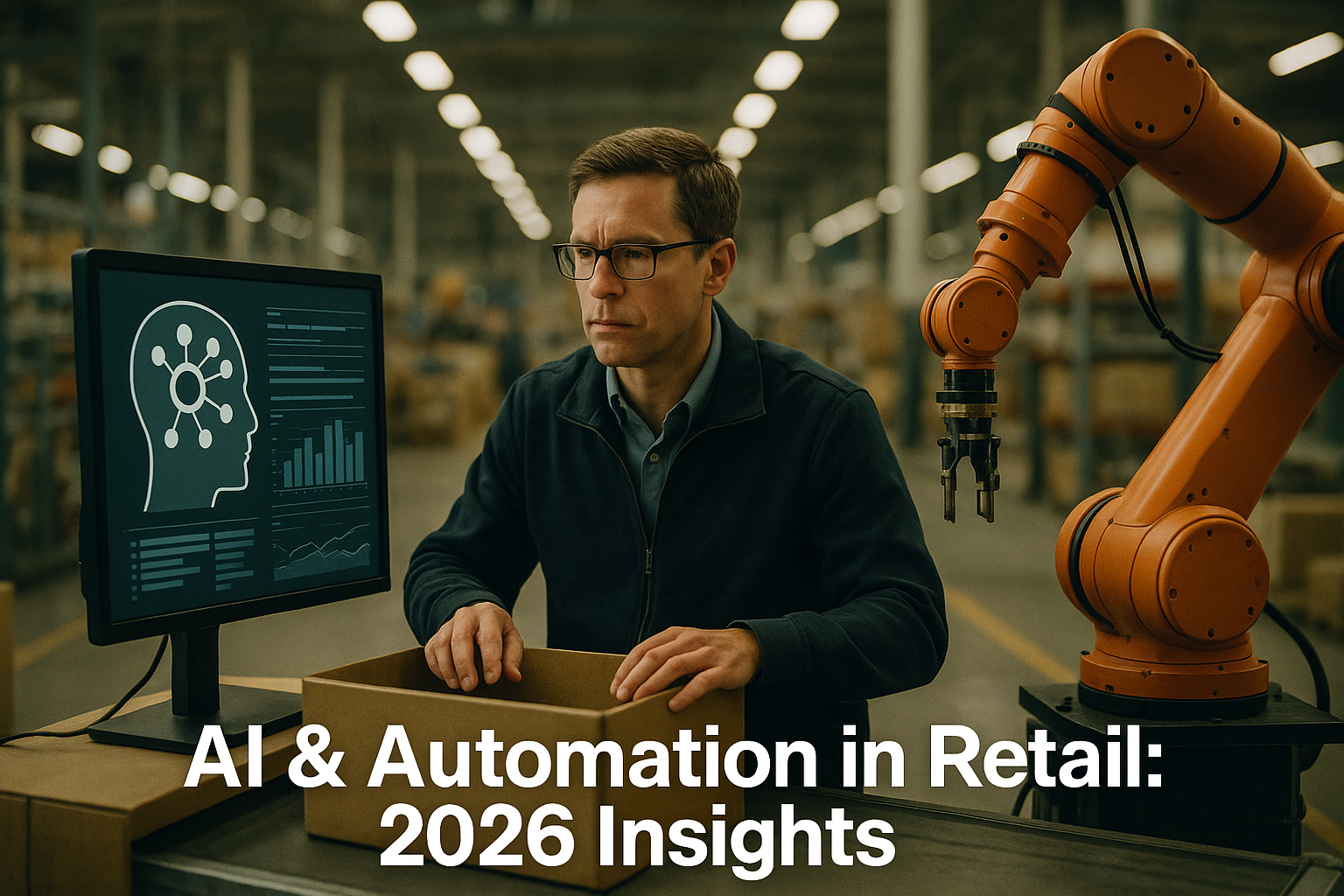
Max Buges, Retail Director at Tendam's Outlet Stores, emphasizes that technology alone won't transform retail operations. Success hinges on the people who wield this technology. Teams need to be trained and prepared to integrate AI into their daily operations. It's the human element that will differentiate brands in an increasingly automated landscape. Despite the rise of AI, the value of skilled personnel remains unmatched.
AI Agentic: Redefining Retail Processes
Minsait's exploration of AI agentic technology at Retail Forum 2026 highlights a significant shift. Instead of merely automating basic tasks, AI agents are beginning to redesign entire business processes. This advancement means that by 2026, over 40% of marketing decisions will be AI-assisted, shifting efficiency from a competitive edge to a basic requirement. Such transformations demand a strategic approach, start with simple processes, demonstrate ROI, and then scale up.
Overcoming Connectivity Hurdles
One of the biggest challenges in adopting AI-driven automation is connectivity. Warehouses, basements, tunnels, and remote routes often suffer from irregular connections, which can impede AI implementation. The solution? Smaller language models that operate offline to ensure uninterrupted operations. Gartner's data supports this approach, ensuring that technology adapts to diverse retail environments rather than being constrained by them.
The Identity Crisis in AI Optimization
There's a cautionary tale in the promise of AI: focusing solely on cost savings and process optimization might erode a brand's unique identity. According to Publicis Sapient's Guide to Next 2026, brands risk becoming indistinguishable if they prioritize efficiency over identity. Therefore, while embracing AI, retailers must also focus on preserving what makes them unique.
Your Path Forward
The retail landscape in 2026 will be one where AI and automation are not just tools but foundational elements of every strategy. However, the journey to this future is not without its challenges. Retailers must navigate technological adoption, human training, and identity preservation. As you prepare to leap into this automated future, consider how each of these elements will play a role in your success.
Frequently asked questions
How will AI change retail operations by 2026?
AI will transform retail operations by making personalized recommendations and seamless checkouts mainstream. It will assist in over 40% of marketing decisions and redesign entire business processes. Retailers will need to integrate AI strategically to maintain a competitive edge and ensure operational efficiency.
What role do humans play in AI-driven retail?
Humans remain crucial in AI-driven retail, as technology alone cannot transform operations. Skilled personnel are needed to integrate AI into daily tasks and maintain a brand's unique identity. Training teams to effectively use AI will differentiate successful brands in an automated landscape.
What connectivity challenges exist for AI in retail?
Connectivity issues in warehouses, basements, tunnels, and remote routes can impede AI implementation. To overcome this, smaller language models that operate offline are used to ensure uninterrupted operations. This approach allows technology to adapt to diverse retail environments rather than being constrained by connectivity limitations.
How can retailers balance efficiency and brand identity with AI?
Retailers must focus on preserving their unique identity while embracing AI for efficiency. Solely prioritizing cost savings and process optimization can erode a brand's distinctiveness. By maintaining a balance between efficiency and identity, retailers can use AI to enhance operations without losing their brand's essence.
What strategic approach should retailers take with AI?
Retailers should start with simple processes, demonstrate ROI, and then scale up when adopting AI. This strategic approach ensures that AI integration is effective and sustainable. By gradually incorporating AI into operations, retailers can effectively manage technological adoption, human training, and identity preservation.
Next step
Which process does your operation run on?
Pick the process slowing you down and apply. We assess whether your operation is a fit, and whether we're the right firm for it.
Review my workflow